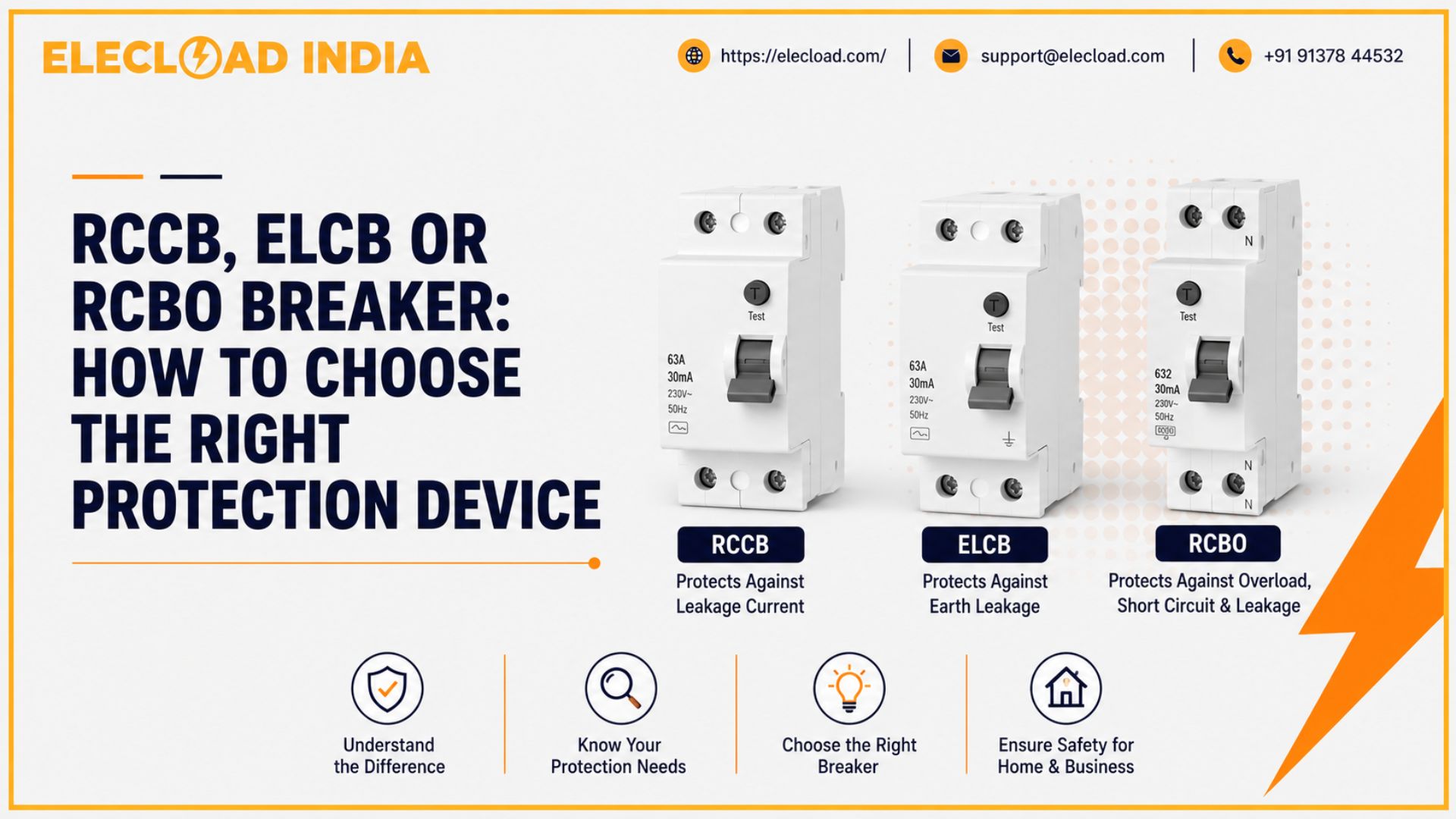
RCCB, ELCB or RCBO Breaker: How to Choose the Right Protection Device
Go to any electrical store and request protection against earth leakage, and you’ll be introduced to three terms: RCCB, ELCB and RCBO. They sound alike, and are confused and are often, but each plays a distinct function in keeping a workplace or home secure. This guide will explain the way each device functions and where it is most appropriate, what factors affect its cost and tips on how to avoid mistakes even skilled electricians often make when deciding on any of these equipments for distribution boards.
Why Earth Leakage Protection Matters in the First Place
Before making a comparison of the three types of devices, it is helpful to understand the real danger they guard against. Miniature circuit breakers, also known as MCBs, are designed to be triggered when the circuit draws more current than it needs to, thus preventing your wire from overheating due to an overload or short circuit. What an MCB can’t detect is current slowly leaking into earth through the casing of an appliance that is damaged, a twisted wire, or worse, the person who has come in contact with a live component.
This is exactly the gap that RCCB, ELCB and RCBO devices are built to close. Even a small leakage current, well below what would trip an ordinary MCB, can be fatal if it passes through a human body for more than a fraction of a second. That is why building codes in most regions now require some form of residual current protection on socket circuits, bathroom circuits and outdoor points, regardless of which specific device type is chosen.
RCCB Explained: The Standard for Earth Leakage Protection
An RCCB, also called a residual current circuit breaker, functions by continuously checking the current flowing through an electrical circuit with the current that flows back to the neutral wire. If the two values don’t coincide, which typically means that the current has flowed towards earth due to a fault, or through an individual device, it will shut off power in milliseconds.
This makes the RCCB one of the most reliable safety devices for protecting against electric shock, and it is especially valuable in homes with children, in bathrooms and kitchens, and on outdoor sockets exposed to moisture. If you are researching RCCB price, keep in mind that cost is driven mainly by the current rating, the sensitivity rating measured in milliamps, and whether you need a single phase or three phase version.
One detail that is often missed when selecting an RCCB is the current rating versus the sensitivity rating, since these are two separate numbers on the same device. The current rating, typically 25 amps, 40 amps or 63 amps, determines how much total load the device can carry. In contrast, the sensitivity rating, most commonly 30 milliamps for domestic use, determines how small a leakage current will trigger a trip. Choosing the wrong current rating for your total connected load is one of the more common sizing mistakes, leading to nuisance tripping under normal use.
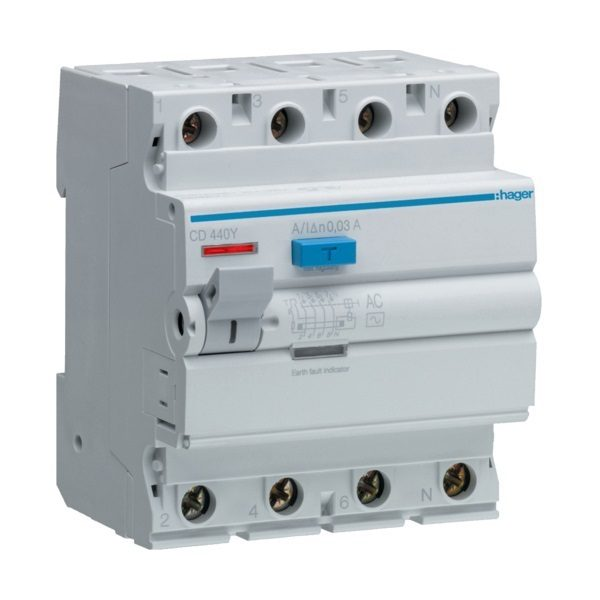
Compare available ratings in our RCCB range to find the right fit for your board.
ELCB: An Older Technology Still Found in Many Buildings
An ELCB, or earth leakage circuit breaker, predates the RCCB and takes a different approach to detecting faults. A voltage operated ELCB watches for a rise in voltage on the earth wire itself rather than comparing current flow directly, which turned out to have gaps in reliably catching every type of earth fault.
Because of this limitation, most new installations today favour current operated devices like the RCCB and RCBO. That said, ELCBs are still common in older buildings and certain industrial setups, so searches for ELCB price remain steady among electricians handling maintenance and replacement work. If you are dealing with an ageing ELCB installation, upgrading to a current operated device is generally worth considering for better protection.
A practical reason many electricians recommend phasing out voltage operated ELCBs is that their protection depends on a properly maintained earth connection at the property. If that earth connection degrades over time, corrodes, or was never installed to the correct resistance value, the ELCB can fail to trip exactly when it is needed most. An RCCB does not share this weakness, since it monitors current directly rather than relying on earth resistance, which is one of the main technical reasons the industry has largely moved away from voltage operated ELCBs.
Our ELCB and RCCB collection covers both new installation and replacement needs.
RCBO Breaker: Two Protections Combined Into One Device
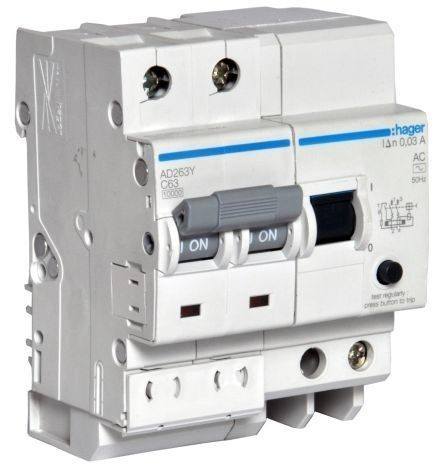
An RCBO breaker takes things a step further by combining the earth leakage protection of an RCCB with the overload and short circuit protection normally handled by a separate MCB, all inside a single unit. In practical terms, this means one device is doing the job that would otherwise need two.
The real advantage shows up at the circuit level. Rather than protecting an entire group of circuits with one shared RCCB, an RCBO can be installed per individual circuit, so a fault in one area trips only that circuit instead of taking down the whole board. This is a big convenience upgrade for modern homes and commercial spaces where isolating problems quickly matters, particularly in properties where losing power to the entire board, including refrigerators, security systems or medical equipment, is not acceptable just because one bathroom socket developed a fault.
The trade off worth knowing before you buy is cost and board space. RCBOs are generally more expensive per circuit than a shared RCCB and MCB combination, and they take up more physical space on a distribution board since each one is a self contained unit. For smaller boards or budget conscious projects, a well planned RCCB and MCB combination often remains the more practical choice. At the same time, RCBOs tend to make the most sense on individual high priority circuits, such as a kitchen ring, a home office, or an outdoor supply.
Browse our RCBO breaker range for circuit level protection on new or upgraded boards.
Common Mistakes to Avoid When Choosing Circuit Protection
Even with a clear understanding of how each device works, a few practical mistakes come up repeatedly on real installations. Grouping too many circuits under a single RCCB is one of the most frequent, since a fault anywhere in that group trips every circuit sharing the device, which can mean losing lighting, refrigeration and security together over one faulty appliance. Splitting circuits across two or more RCCBs, or using RCBOs for the most critical circuits, avoids this problem.
Another issue that is common is choosing the device based on price, without examining the certification and capacity against the actual load. A device that is not certified may not work reliably or, even worse than that, may not even start at all in the event of an actual fault. Always verify ISI or equivalent certifications and compare the current rating with the board’s current load calculation, not making assumptions.
Finally, many installations skip periodic testing entirely. Every RCCB, ELCB and RCBO has a built in test button that should be pressed periodically, generally recommended every three months, to confirm the tripping mechanism still functions correctly. A device that has not tripped in years may have developed a fault that only testing will reveal.
Side by Side: Which Device Fits Your Situation
For a straightforward setup where one device protects a group of circuits alongside individual MCBs, an RCCB remains the most cost effective and widely used option. If you are inspecting or maintaining an older property, you may still run into ELCB units, though replacing them with current operated alternatives is the safer long term move. And where you want combined overload plus earth leakage protection on a per circuit basis, an RCBO breaker is the more advanced and increasingly popular choice.
Regardless of which device fits your project, always buy from certified, trusted brands, since these are safety critical components with real consequences if they fail.
Final Thoughts
Understanding the distinctions between RCCB, ELCB and RCBO breakers will aid you in making a secure and informed decision about the distribution of electricity. When you are establishing a new installation or replacing an older safety device, selecting the right type of protection for each circuit is vital. Browse our complete range of circuit breakers or contact us for assistance in selecting the right design and rating to suit your specific installation.
Frequently Asked Questions
1. Is an RCCB the same as an ELCB?
No, they are different technologies. An RCCB directly compares incoming and outgoing current to detect a fault. At the same time, an ELCB, particularly the voltage operated type, monitors voltage on the earth wire, which is a less reliable method for catching every kind of earth fault.
2. Do I need an RCBO if I already have an RCCB installed?
Not necessarily. An RCCB together with one or more MCBs already provides overload protection and earth leakage for a particular circuit. An RCBO is a good choice for those who want the same protection to be isolated to a single circuit, rather than distributed across multiple circuits.
3. Why has ELCB become less common in new installations?
ELCB technology, especially the voltage operated version, has known gaps in detecting certain earth fault conditions reliably. Current operated devices like RCCB and RCBO respond more consistently, which is why most electricians now recommend them for new work.
4. What sensitivity rating should I choose for an RCCB?
A 30 milliampere sensitivity rating is the standard recommendation for personal shock protection in homes, since it is sensitive enough to trip before a dangerous current passes through a person. In contrast, higher ratings are typically reserved for equipment level protection.
5. Can one RCBO breaker protect multiple circuits?
An RCBO is a device designed to safeguard one circuit at a time. If you require protection for several circuits, you can install multiple RCBOs per circuit, or install an RCCB with a single MCB, or separate MCBs for each circuit.
6. How often should an RCCB or RCBO be tested?
Most manufacturers and electrical safety guidelines recommend pressing the built in test button roughly every three months, since this confirms the tripping mechanism is still working correctly and catches a fault before it becomes a real safety risk.
7. Why does my RCCB trip frequently even when nothing seems wrong?
Frequent nuisance tripping usually points to either an undersized current rating for the connected load, too many circuits grouped under one device, or a minor insulation fault somewhere on the circuit that only shows up under certain conditions, so it is worth having an electrician check the load balance and circuit insulation.