MCB, RCCB, or ELCB- Understand the Difference Before You Buy
Ever noticed those three-letter breakers—MCB, RCCB, or ELCB—on your home’s distribution board and wondered which protects what? It seems that they are really essential but do you really know how they function or which one is actually required?
Learning about the function of the components for efficiency and safety is important when it comes to home electrical protection devices. Selecting the incorrect breaker may expose your house to preventable electrical hazards.
That’s why we created this guide—to break down the difference between MCB and RCCB, explore how ELCB vs RCCB vs MCB compare, and help you decide which one aligns with your specific electrical needs.
MCB vs RCCB vs ELCB – Key Functional Differences
Before understanding in depth, a quick comparison to help you understand their individual roles in your electrical system:
| Feature | MCB | RCCB | ELCB |
| Functionality | Protects against overload and short circuit | Detects leakage current between live and neutral | Detects leakage current via earth wire |
| Personal Safety | No protection from electric shock | Designed to prevent electric shock | Limited; depends on earth wire integrity |
| Effectiveness | Good for appliance-level protection | Highly effective for human protection | Outdated and less reliable |
| Ground Wire Dependency | Not required | Not required | Mandatory |
| Suitability for Modern Use | Essential for basic circuits | Recommended for new installations | Avoid unless legacy wiring is in place |
| Response Time | Instant trip on fault | Trips within milliseconds (usually <30 ms) | Slower response; voltage-dependent |
What Is an MCB and Why Is It Essential?
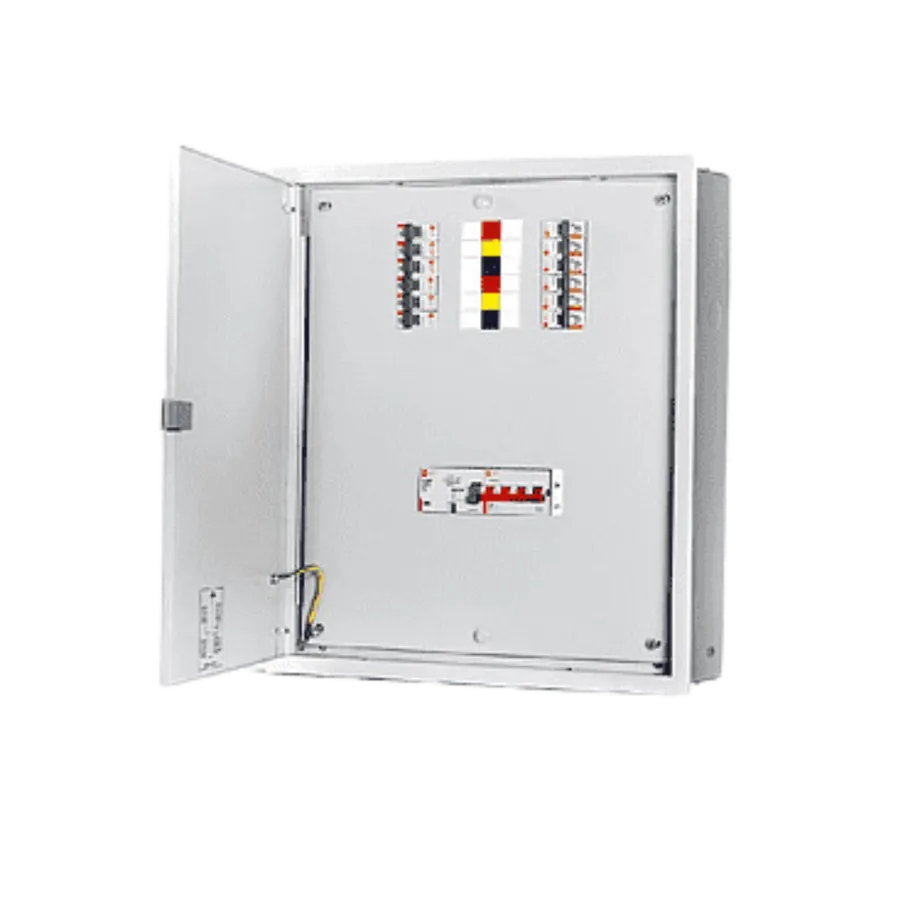
MCB full form Miniature Circuit Breaker, is a compact, automatic device that protects your home’s wiring and appliances by shutting off the power during overloads or short circuits.
Unlike traditional fuses, it doesn’t need replacing or manual resetting—it trips automatically when it detects abnormal current.
How Does an MCB Work?
MCBs use two mechanisms:
- Thermal trip unit (bi-metallic strip) for slow, sustained overload protection
- Magnetic trip unit (solenoid-based) for instantaneous short circuit response
These dual protections make MCBs highly reliable for circuit-level fault isolation.
MCB Variants & Their Usage
Types of MCBs:
- SP (Single Pole): Ideal for lights, fans, and single-phase outlets
- DP (Double Pole): Controls both phase and neutral—great for appliances like geysers or ACs
- TP (Triple Pole): Used in commercial three-phase load setups
- TPN / 4P: For industrial panels with neutral protection
Common Applications:
- Residential circuits (lighting, sockets)
- Offices and retail spaces
- Small industrial machines
What Is an RCCB and Why Does It Matter?
An RCCB (Residual Current Circuit Breaker) is a high-tech safety device that stops electric current leaks, preventing electric shocks or fires.
It works by detecting imbalances between the live and neutral wires, so if electricity is flowing through a person or any unsafe path, it trips the circuit. Meanwhile, an MCB (Miniature Circuit Breaker) protects your appliances from overloads and short circuits.
How Does an RCCB Work?
RCCBs operate on a differential current principle:
- The current passing through the neutral and live wires is equal under typical circumstances.
- The RCCB trips immediately when exposed to even a tiny leak (usually 30mA), cutting off power in milliseconds.
This makes it incredibly effective in situations where the MCB fails to react, especially in wet or high-risk areas.