4 Core Cable Explained: Applications, Sizes and Buying Guide
Every electrical installation in India at some point reaches a situation where a single wire or a two core cable will not do the job. When a three phase motor needs to be powered, when a lift requires a dedicated feed, or when a residential complex needs power distributed from a substation to the main panel, the answer is almost always the same — a 4 core cable.
Despite being one of the most widely used power cables in Indian commercial and industrial electrical work, it is often misunderstood. Buyers sometimes confuse it with 3 core cable, or are unsure about whether to choose copper or aluminium conductors, or whether to go for an armoured or unarmoured variant for their specific application.
What a 4 core cable is, how it is structured, what each of its four conductors is used for, the standard sizes available in India, the applications where it performs best, and how to choose the right one for your project. At Elecload India, founded by Bhavin Joshi and operating from Mumbai since 2019, we stock genuine options from trusted brands including Polycab, with fast delivery and manufacturer warranty across India.
What Is a 4 Core Cable?
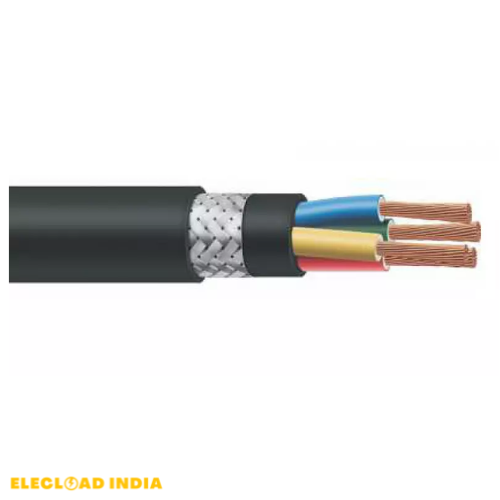
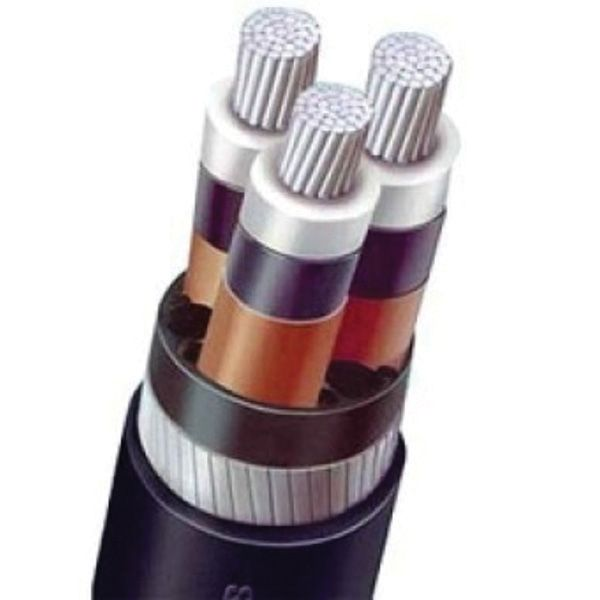
A 4 core cable is a power cable that contains four individually insulated conductors bundled together inside a common outer sheath. Each conductor is insulated separately with PVC or XLPE compound. All four are laid together and enclosed in an overall outer jacket that protects the assembly from mechanical damage, moisture, and environmental exposure.
The four conductors inside are not all used the same way. In a standard three phase installation, three of the four conductors carry the three phase lines, labelled R, Y, and B or Red, Yellow, and Blue. The fourth conductor serves as the neutral, providing the return path for unbalanced current across the three phases.
This four conductor arrangement makes it the standard choice for three phase power distribution across a wide range of Indian electrical applications, from apartment building sub-mains to industrial machine feeds.
How a 4 Core Cable Is Constructed
Understanding these construction layers helps when comparing products and selecting the right type for a specific application.
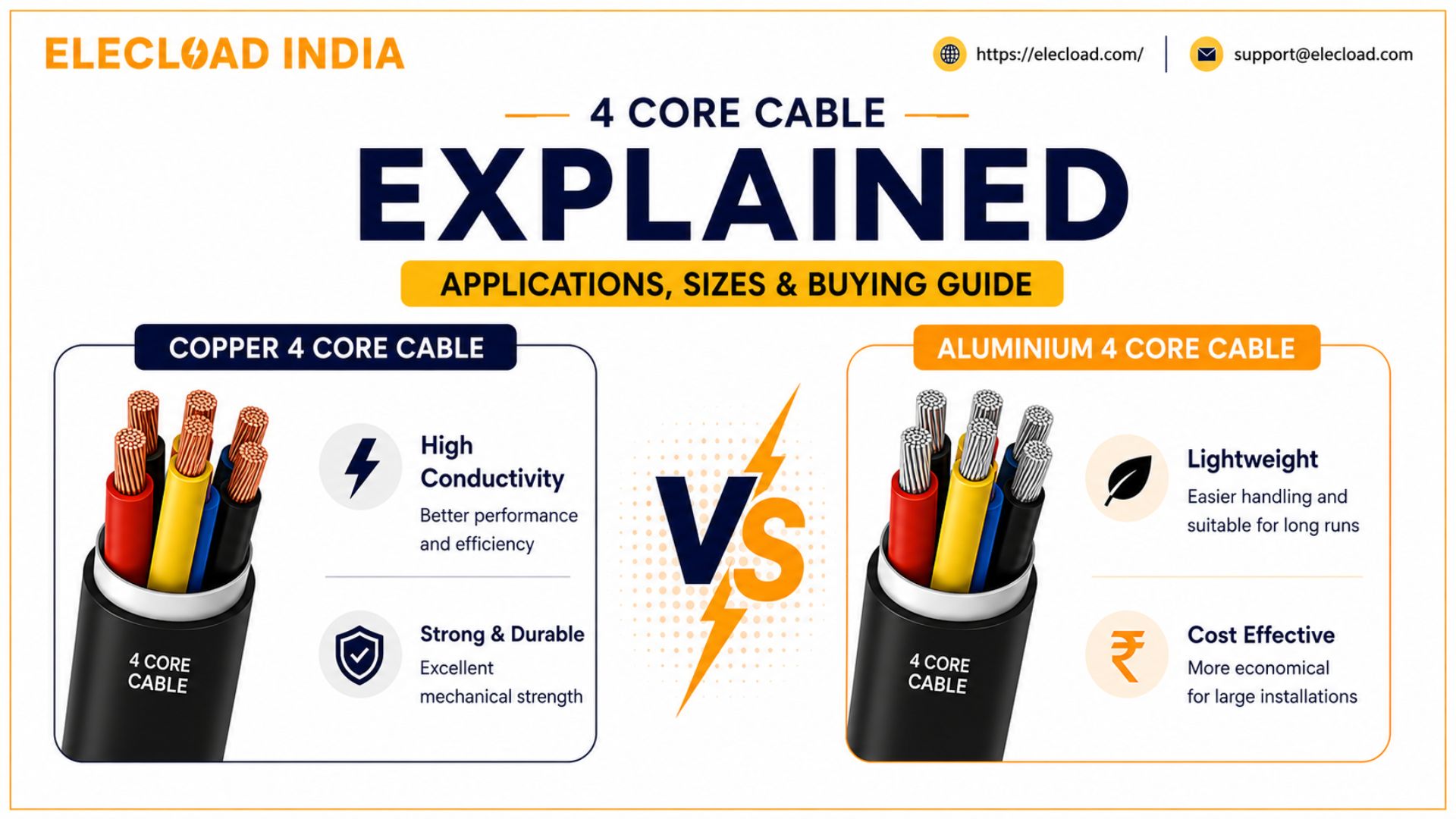
The innermost part of the cable is the conductor itself. In copper core cables, the conductors are made from stranded annealed copper, which offers excellent conductivity, flexibility during installation, and long term performance under load. In aluminium core cables, the conductor is aluminium stranded wire, which is lighter and less expensive per unit length but has a lower conductivity than copper and requires slightly larger cross sections to carry the same current.
Each conductor is covered with a primary insulation layer, either PVC for standard applications or XLPE for higher temperature and higher voltage rated cables. PVC insulation is suitable for most LT (Low Tension) power cables used in residential and commercial work. XLPE insulation offers better thermal performance and is preferred for cables that carry heavier loads or operate in higher ambient temperature conditions.
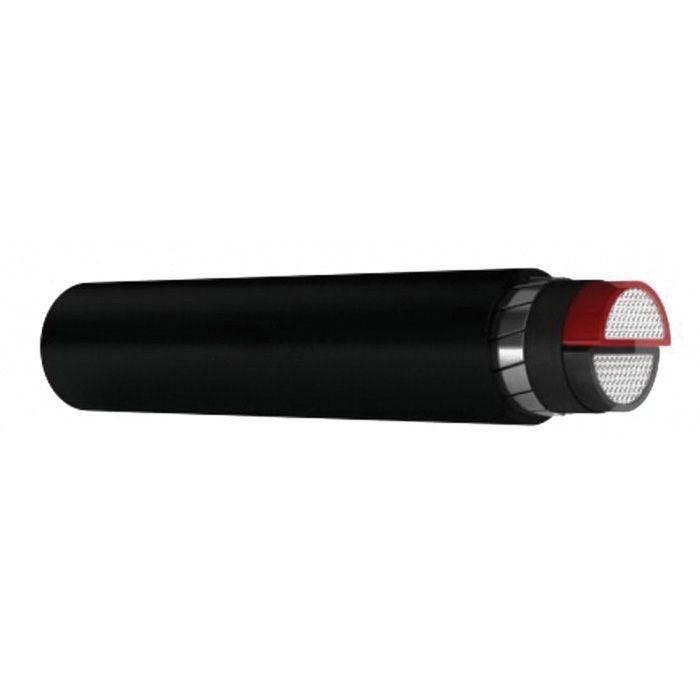
Over the four individually insulated cores, a bedding layer is applied to hold the cores together and provide a smooth surface for the next layer. In armoured cables, this is where the armour sits, either steel wire armour (SWA) for maximum mechanical strength, or aluminium wire armour for cables where the armour is also expected to provide an earth path. In unarmoured cables, this layer is followed directly by the outer sheath.
The outer sheath is typically a black PVC jacket that protects the entire cable from UV exposure, moisture, oil, and physical abrasion during and after installation.
Types of 4 Core Cable Available in India
The Indian electrical market offers several variants, each suited to different installation environments and load requirements.
Copper 4 Core PVC Cable
This is the most commonly used variant in Indian residential and commercial projects. Copper conductors with PVC insulation and a PVC outer sheath make it suitable for above ground, indoor, and surface wiring applications where the cable is installed inside trays, ducts, or conduits and is not exposed to direct burial or significant mechanical stress.
Copper 4 Core Armoured Cable
For situations in which the cable runs underground or through walls, or situations where mechanical damage could be a possibility, an armoured copper version is the best option. The armour layer shields the cable from being crushed, rodent attack, as well as accidental digging, which allows for direct burial without the protection of the conduit.
Aluminium 4 Core Armoured Cable
Aluminium armoured cables in 4 core configuration are widely used for underground power distribution in residential complexes, commercial buildings, and utility connections. Aluminium conductors make the cable lighter and more cost effective over longer runs compared to copper, which is a significant practical advantage when distributing power between buildings or across large sites. Buyers comparing aluminium cable price against copper cable options will consistently find aluminium to be the more economical choice for long distance distribution work.
Standard Sizes of 4 Core Cable in India
This cable type in India is manufactured in a range of conductor cross section sizes to match different current carrying requirements. The size is expressed in square millimetres (sqmm), referring to the cross-sectional area of each individual conductor.
Smaller sizes like 1.5 sqmm and 2.5 sqmm in four core configuration are used for light duty control wiring and small appliance connections where three phases plus neutral is needed, but current demand is low. A 4 sqmm 4 core cable is the standard choice for household sub-mains in larger homes and for feeding individual three phase equipment such as small air conditioning units and single phase to three phase converter circuits.
Moving up, 6 sqmm and 10 sqmm sizes cover larger three phase loads such as commercial air conditioning, water pumps, and small industrial machinery. The 16 sqmm and 25 sqmm sizes are used for building sub-mains, distribution board feeder cables, and medium industrial motor feeds. For heavier distribution runs in larger buildings and industrial installations, sizes from 35 sqmm to 240 sqmm are available in both copper and aluminium four core configurations.
The proper size for a particular use is determined by the load the cable has to carry, the length, as well as the temperature conditions and the method of installation, depending on whether the cable is attached to an object, laid on an underground tray, buried, or bunched with the other cables. Undersizing is a danger to safety; cables that are too small are prone to overheating, deteriorating insulation, and could cause fires over the course of time.
Key Applications of 4 Core Cable in India
Three Phase Motor and Pump Feeds
Three phase motors are found in water pumps, air compressors, conveyor systems, and industrial machinery across India. Every one of these motors needs a three phase plus neutral power supply, which is exactly what this cable type is designed to deliver. The cable runs from the motor control centre or starter panel directly to the motor terminal box, carrying R, Y, and B phase along with the neutral in a single, clearly organised cable.
Building Sub-Main Distribution
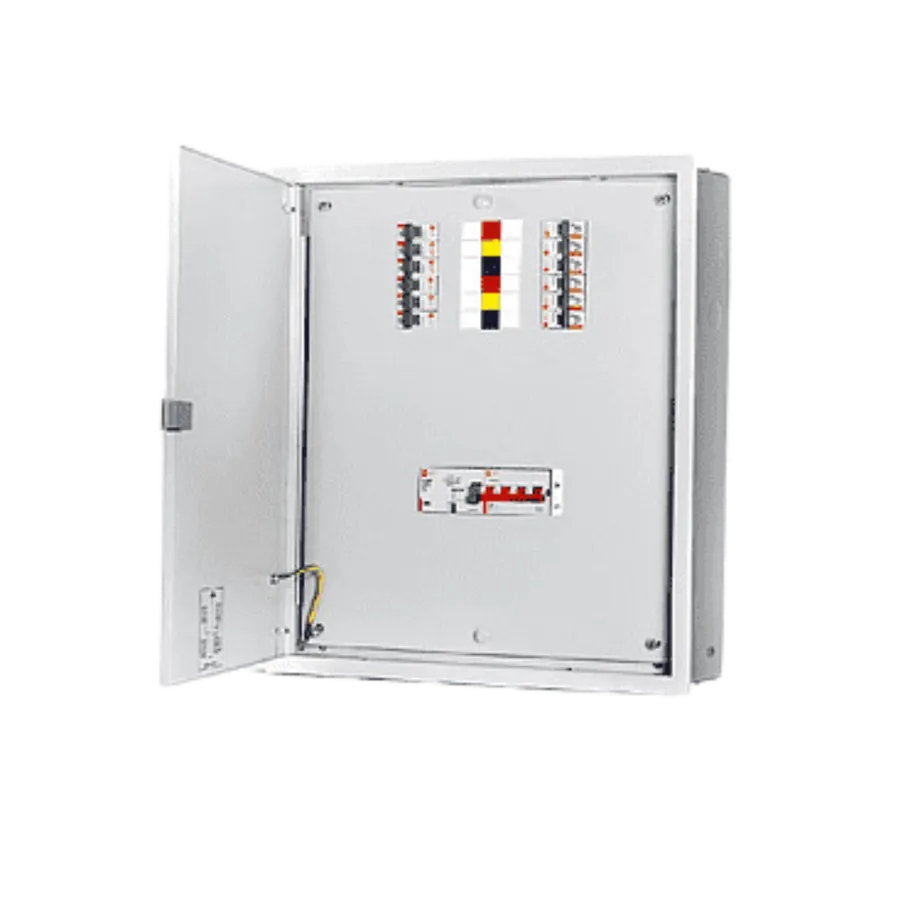
In multi-storey residential buildings, apartments, and commercial complexes across India, the main three phase supply comes into the building at ground level and then needs to be distributed to each floor, each wing, or each tenant. This sub-main distribution work is almost always done with this cable, running from the main VTPN DB on the ground floor up through cable risers to distribution boards on each floor. The four cores carry the three phases and neutral, while a separate earth conductor or the cable’s armour layer provides the earth path.
Residential Complex Underground Mains
When a residential complex receives its power supply from the electricity utility at a substation or cable pit, the connection from that incoming point to the building’s main panel is typically made with underground aluminium armoured cables in 4 core configuration. The aluminium armoured variant is preferred here because the runs are long, the conductor cost matters at these cross sections, and the armour provides the mechanical protection needed for direct burial in the ground.
Commercial and Industrial Power Distribution
Office buildings, factories, hospitals, hotels, and retail complexes all rely on this cable to distribute three phase power between their main switchgear and the various distribution boards that serve different sections of the building. In industrial installations, the same cable is used to feed large motors, heating equipment, and three phase machinery from the motor control centre.
Generator and UPS Output Connections
Standby generators and UPS systems in commercial buildings output three phase power through purpose rated cables to the automatic transfer switches, change over panels, and essential load distribution boards. These connections carry the building’s full backup load and require correctly sized cable to handle the current without voltage drop or overheating during extended generator operation.
How a 4 Core Cable Fits Into the Complete Electrical System
This cable type does not work in isolation. It is one component in a complete electrical installation chain, and understanding where it sits helps in planning the full project correctly.
The three phase supply enters a building and is received at the main incoming panel, typically a VTPN DB for larger installations or sometimes a dedicated metering and protection panel. From there, the supply cable carries the three phase plus neutral to sub-distribution boards on each floor or zone. From those sub-distribution boards, three phase loads are fed by further cable runs of the same type. In contrast, single phase circuits are taken off individually using single core wiring routed through PVC conduits to socket outlets, lights, and switches served by an SPN distribution board on each floor.
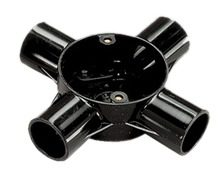
At every junction in this system where cables branch or terminate, a properly sized PVC junction box must be used to protect the connections and keep them accessible for future maintenance. No joint should ever be made directly inside a conduit or buried without an enclosure.
What to Check Before Buying a 4 Core Cable
Buying the wrong cable for the job is an expensive and potentially dangerous mistake. Here are the key specifications to confirm before placing an order.
Conductor material matters significantly. Copper offers better conductivity and flexibility; aluminium offers lower cost and lighter weight for long distribution runs. For short runs feeding motors and equipment, copper is generally preferred. For long underground distribution runs between buildings, aluminium is more practical and cost effective.
Voltage rating must match the installation. Most LT installations in India use cables rated at 1.1 kV (1100V). Confirm this before buying, especially for industrial applications.
Armoured versus unarmoured is determined entirely by the installation environment. Any cable that will be buried underground, run through areas with potential mechanical damage, or installed outdoors must be armoured. Cables installed in protected indoor environments on cable trays or inside conduits can be unarmoured.
Conductor cross section, or sqmm size, must be calculated based on the actual load current, the cable run length, and the installation method. When in doubt, consult an electrical engineer or qualified electrician before specifying the cable size.
Certification is important. All cables that are purchased to be used in India must bear ISI markings or be manufactured in accordance with the applicable BIS standard applicable to the type of cable. If you purchase a cable that is not certified, it’s an opportunity that has no savings and is worth the risk.
Best Brands for 4 Core Cable in India
Polycab is India’s most widely trusted name for power cables, and their 4-core braided copper cable is a consistent choice across residential, commercial, and industrial projects. Havells, RR Kabel, Finolex, and KEI are other well established manufacturers with strong track records in the Indian electrical market.
For aluminium four core armoured cables, Polycab and Havells both offer a reliable range of sizes from the smaller cross sections used in residential sub-mains up to the large cross sections used in utility distribution.
All cable products available at Elecload India are 100 percent genuine, sourced from authorised brand channels, and backed by full manufacturer warranty. Shop the complete range at elecload.com.
Conclusion
A 4 core cable is one of the fundamental building blocks of any three phase electrical installation in India. Whether the project is a residential complex drawing power from an underground substation connection using aluminium armoured cables, a commercial building distributing three phase power across floors from a VTPN DB, or an industrial facility feeding motors and heavy equipment, this single cable type handles the core distribution work.
Choosing correctly means understanding conductor material, cross section size, armoured versus unarmoured construction, and voltage rating for the specific application. Pairing the right 4 core cable with properly sized distribution boards, protective conduits, and correctly installed junction boxes gives an installation that will carry its load safely for many years.
At Elecload India, the complete range of 4 core cable options in copper and aluminium, armoured and unarmoured, across all standard sizes is available online with genuine quality assurance and pan India delivery.
Browse Wires and Cables at Elecload India
Frequently Asked Questions
Q1. What is a 4 core cable used for?
This cable type is used to carry three phase electrical power along with a neutral conductor in a single cable. It is the standard choice for feeding three phase motors, pumps, and machinery, for building sub-main distribution between floors, for underground power connections between buildings, and for generator and UPS output connections in commercial and industrial installations.
Q2. What’s the difference between a three core cable and the 4 core cable?
A 3 core cable contains three conductors, typically used for three phase connections without a neutral, or for single phase circuits needing live, neutral, and earth in one cable. A 4 core cable has four conductors, used for three phase plus neutral applications where an unbalanced load return path is needed. In most Indian three phase power distribution work, 4 core cable is the standard because the neutral is required.
Q3. Which is better for a 4 core cable, copper or aluminium?
For short runs feeding motors and equipment in industrial settings, copper is generally preferred because of its better conductivity and flexibility. For long underground distribution runs between buildings or across large sites, aluminium is more practical because it is lighter, significantly less expensive per metre, and the aluminium cable price advantage becomes very significant at larger cross sections and longer distances.
Q4. What size 4 core cable do I need for a 3 phase motor?
The proper size is determined by the motor’s maximum load current as well as the length of the cable and the method of installation. As a general guideline the 2.5 sqmm 4 core cable can handle up to 15-18 amps for shorter runs through conduit, whereas 4 sqmm can handle up to 22-25 amps. To determine the exact size, consult the IS 694 table of current capacity for cables or consult a licensed electrician, as cables that are too small can be dangerous and burn.
Q5. Does a 4 core cable need to be armoured for underground installation?
Yes. Any 4 core cable intended for direct burial underground must be armoured. The armour layer, either steel wire armour or aluminium wire armour, protects the cable from the mechanical stress of the surrounding soil, accidental digging, and rodent damage. Running an unarmoured cable underground without additional conduit protection is unsafe and non-compliant with Indian wiring standards.
Q6. What is the difference between a 4 core armoured cable and a 4 core unarmoured cable?
The 4 core armored cables has an armour layer of aluminium or steel wires that are wrapped around the cable’s core between the bedding inside and the outer sheath. This provides an element of protection that can be used for outdoor burial or direct burial. A unarmoured 4 core cable is not protected by the armour layer making it more flexible and lighter however it is only suitable for indoor use in cables trays, conduits or trunking.
Q7. Can a 4 core cable be used for single phase applications?
Technically yes, but it would be an inefficient use of cable. A 4 core cable used for single phase would typically use one core as live, one as neutral, one as earth, and leave the fourth conductor unused. For single phase circuits, a 2 core or 3 core cable is the more practical choice. Using a 4 core cable for single phase work is sometimes done when the same cable route is planned to carry three phase power in the future.
Q8. What is a VTPN DB and how does it relate to 4 core cable?
A VTPN DB is a Vertical Triple Pole and Neutral distribution board designed for three phase power distribution. The 4 core cable is the standard cable used to connect the incoming three phase supply to the VTPN DB, and also to connect sub-distribution boards from the VTPN DB to each floor or zone in a building. The four cores carry R phase, Y phase, B phase, and neutral, which matches exactly the four busbar connections inside a VTPN DB.
Q9. Where can I buy a genuine 4 core cable online in India?
You can shop for genuine 4 core cable from Polycab and other trusted brands at Elecload India, elecload.com. Established in December 2019 and operated by Bhavin Joshi from Mumbai, Elecload India offers 100 percent genuine products with full manufacturer warranty, secure online payment, and fast delivery across India. Call 9321025013 for product queries and bulk pricing.
Q10. What is the voltage rating of a standard 4 core cable in India?
The most widely used 4 core cable for LT power distribution in India carries a voltage rating of 1.1 kV (1100 Volts), suitable for virtually all residential, commercial, and standard industrial applications connected to the public electricity supply. For medium tension applications above 1.1 kV, specifically rated HT cables are required and should be specified by a qualified electrical engineer.
Shop 4 Core Cable at Elecload India
Published by Elecload India | Founded by Bhavin Joshi | Shop no. 31A, Khajuria Nagar, Khajuria Tank Road, Near Bhadran Nagar, Kandivali West, Mumbai, Maharashtra 400067 | Phone: 9321025013 | Category: Wires and Cables | Last Updated: June 2026