PVC Conduits for Home Wiring: Advantages, Sizes and Pricing
When you walk into a newly built apartment in India and flip a switch, the electricity travels through carefully routed wires hidden inside walls, ceilings, and floors. What protects those wires — keeping them organised, safe, and insulated from heat, moisture, and physical damage — is a system of PVC conduits running silently behind every finished surface.
Most homeowners never think about PVC pipes until a renovation reveals them or an electrical fault forces attention on the wiring. But electricians, contractors, and builders know that the quality and sizing of the conduit system determines how reliable and how safe an electrical installation will be for the next 20 to 30 years.
This guide covers everything you need to know about PVC conduits for home wiring in India — what they are, the types available, how to choose the right size, what accessories go with them, and where to buy genuine products at the best price.
At Elecload India, founded by Bhavin Joshi and operating from Mumbai since 2019, you will find a complete range of PVC pipes, conduit junction box options, PVC insulation tape, and all associated accessories from trusted brands at competitive prices with pan-India delivery.
What Are PVC Conduits and Why Are They Used in Home Wiring?
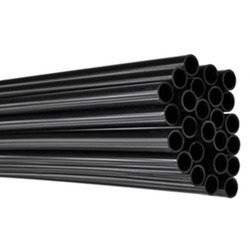
PVC conduits — also called electrical conduits or electrical pipes — are hollow tubes made from Polyvinyl Chloride (PVC) or unplasticised PVC (uPVC) that form the physical pathway through which electrical wires are routed inside a building. In Indian home wiring, PVC conduits serve three critical functions.
The first function is physical protection. Electrical wires are vulnerable to mechanical damage during and after construction. PVC pipes shield wires from impact, compression, rodent damage, and accidental drilling or nailing during future renovation work.
The second function is electrical safety. PVC conduits electrically isolate the wire from the building structure. If a wire develops a fault or its insulation degrades, the conduit prevents the fault current from reaching the wall, floor, or ceiling — reducing the risk of electric shock and fire.
The third function is organisation and future accessibility. Wires routed through electrical conduits can be replaced or upgraded without breaking walls. An electrician can pull new wires through the existing conduit run using a fish wire — a significant advantage when upgrading wiring years after construction.
In India, IS 9537 governs the requirements for the rigid PVC conduits to be used in electrical installations. Conduits that are compliant are made to exact wall thickness as well as impact resistance and standards of flame retardancy to safeguard the wiring as well as the structure.
Types of PVC Conduits Available in India
Understanding the types of electrical conduits available helps you choose the right product for each part of your installation.
Rigid uPVC Conduits (LMS, MMS, HMS)
Rigid uPVC conduits are the most widely used type in Indian home wiring. They are manufactured in three wall thickness grades — LMS (Light Medium Series), MMS (Medium Medium Series), and HMS (Heavy Medium Series).
LMS conduits are the lightest grade — suitable for ceiling runs and areas where the conduit is fully protected within plaster or screed and is not exposed to heavy mechanical stress.
MMS conduits are the standard grade used in most residential wall wiring applications. They offer better impact resistance than LMS and are suitable for walls and floors where moderate mechanical stress is possible.
HMS conduits are the heaviest grade — used in floors, under roads, and in industrial or commercial applications where significant mechanical loading or impact is expected. For most Indian homes, MMS is the correct choice for wall wiring and LMS for ceiling work.
Flexible PVC Conduits
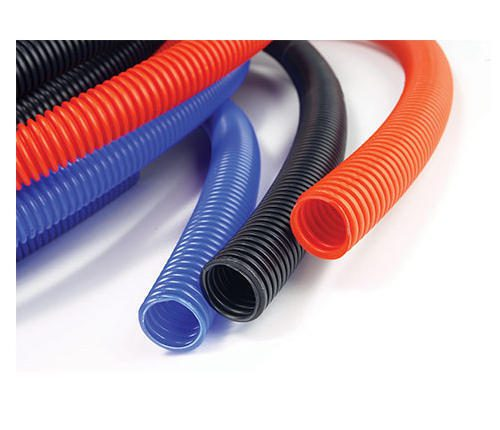
Flexible PVC conduits are used where rigid pipes cannot make the turn — at switchboard entries, motor connections, and equipment terminations. The flexible conduit pipe from Precision is manufactured from specially formulated uPVC to meet IS 3419 standards. It bends easily without kinking, making it ideal for final connections to distribution boards, fan boxes, and switchgear.
Standard Sizes of PVC Conduits for Home Wiring in India
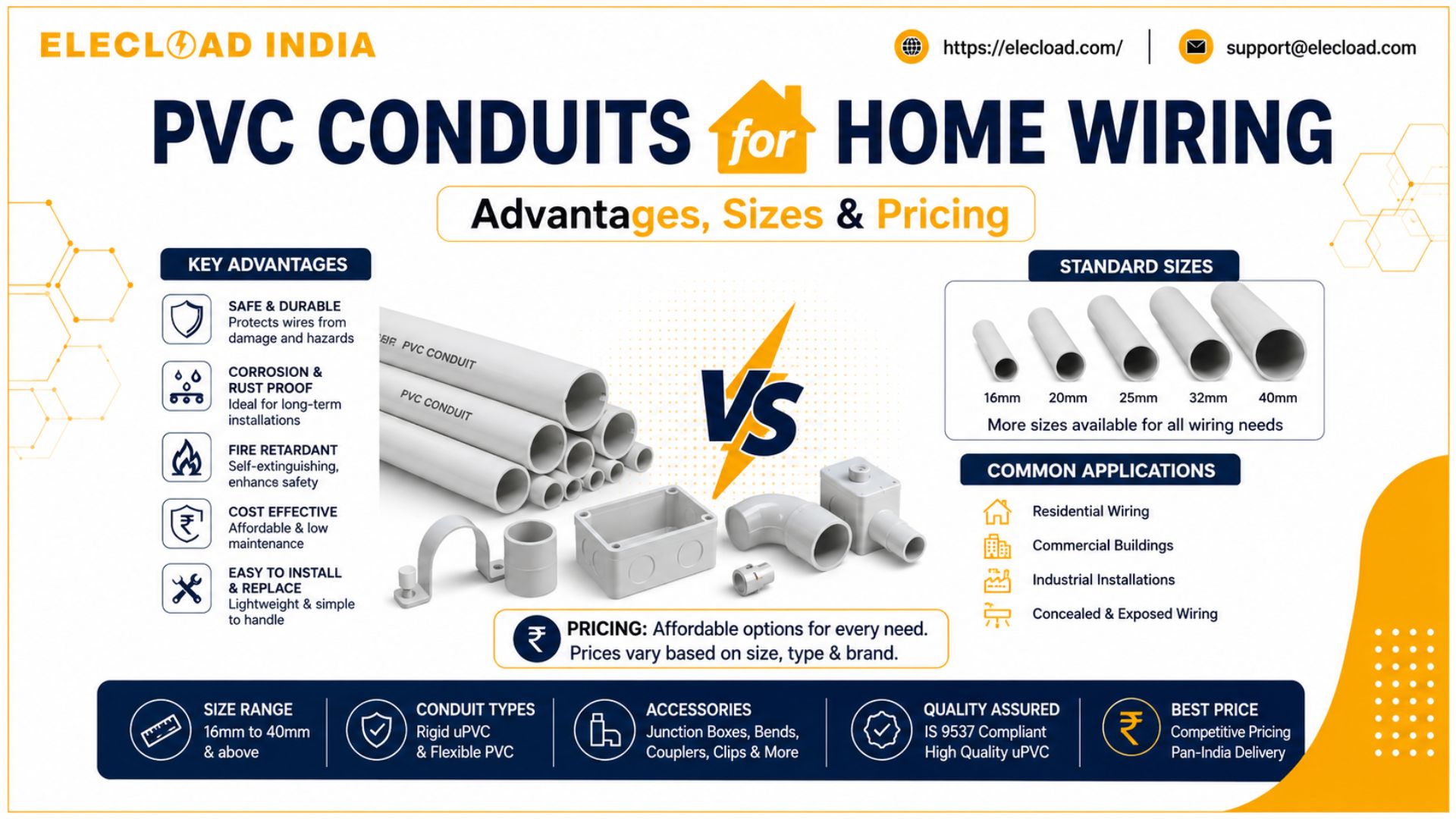
PVC conduits in India are manufactured in standard metric sizes. The size refers to the nominal outer diameter of the conduit. The most commonly used sizes in residential wiring are as follows.
16mm PVC conduits are used for light wiring circuits — bedroom lighting, fan circuits, and low-load socket circuits carrying 1.5 sq mm or 2.5 sq mm wires with up to 3 conductors.
20mm PVC pipes are the most widely used size in Indian homes. They accommodate 2.5 sq mm and 4 sq mm cables with 3 to 4 conductors and are used for bedroom sockets, kitchen circuits, and general-purpose wiring throughout the house.
25mm electrical conduits are used for heavier circuits — air conditioning units, geysers, and high-load kitchen appliances — where 4 sq mm or 6 sq mm cables with multiple conductors need to be routed. 32mm and 40mm conduits are used in sub-mains, wiring from the meter to the distribution board, and commercial installations where larger cables need to be carried.
A common mistake in Indian home wiring is undercounting the number of wires that will run through each conduit. As a rule, the total cross-sectional area of all conductors inside a conduit, including insulation, should not exceed 40 percent of the conduit’s internal cross-sectional area. This 40 percent fill rule ensures there is enough space for heat dissipation and for pulling wires during installation and replacement.
Key Advantages of PVC Conduits Over Metal Conduits
Many older installations in India used GI (Galvanised Iron) conduits for wiring. Most modern residential and commercial projects now use uPVC conduits. Here is why.
Corrosion Resistance
GI conduits age over time, particularly in areas of high humidity, coastal areas, bathrooms and kitchens, as well as underground installations. Rust can weaken the conduit and create sharp edges, which can harm the insulation of wires and also allow moisture to get into the wire run. PVC conduits are not prone to corrosion, rust, or deteriorate in humid environments, which makes them the best choice for Indian climates in all regions.
Electrical Insulation
Metal conduits conduct electricity. If a live wire comes into contact with a metal conduit, the entire conduit run becomes energised — creating a shock hazard at every conduit termination point. PVC conduits are non-conductive and do not require earthing, eliminating this risk.
Lightweight and Easy to Install
uPVC electrical pipes are significantly lighter than GI conduits of the same size. This makes handling, cutting, bending, and installation faster and less physically demanding. A standard 3-metre length of 20mm uPVC conduit weighs a fraction of its GI equivalent — electricians can carry multiple lengths easily and complete installations faster.
Fire Retardancy
Quality uPVC PVC conduits manufactured to IS 9537 are self-extinguishing and flame retardant. They do not propagate fire along their length. If a fire starts at one point in the wiring, the conduit prevents it from spreading through the wall cavity to other parts of the building.
Cost Effective
PVC pipes are significantly less expensive than GI conduits both in product cost and in installation cost due to their lighter weight and ease of handling. For an entire home wiring project, the cost saving compared to metal conduit can be substantial.
PVC Conduit Accessories You Need for a Complete Wiring System
A PVC conduit installation requires more than just the pipes themselves. The accessories that connect, join, route, and terminate the conduit are equally important to the integrity of the installation.
Conduit Junction Box
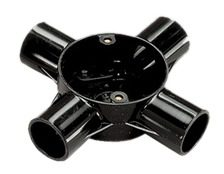
The conduit junction box — also called a PVC junction box — is one of the most important accessories in any conduit installation. Junction boxes are used at every point where wires need to branch, join, terminate, or change direction. They provide an enclosed, accessible housing that protects wire connections and keeps them accessible for future maintenance.
Common types available at Elecload India from Precision Pipes include Circular Junction Box (2-way, 3-way, 4-way), Deep Junction Box for multi-wire connections, Fan Box for ceiling fan installations, and Loop In Box for clean circuit branching. Junction boxes are available in 19mm, 20mm, and 25mm sizes to match the conduit diameter being used.
Every wire joint in a conduit installation must be made inside a conduit junction box — not inside the conduit itself. This is both an IS standard requirement and a practical necessity, as joints inside conduits cannot be accessed for inspection or repair.
Conduit Couplers
Couplers connect two lengths of conduit from end to end. A standard length of conduit of 3 meters will require couplers whenever runs exceed 3 meters or when conduits have to be joined following cutting. Make sure to use couplers of the same manufacturer as the conduit to guarantee a perfect fit and a consistent wall thickness.
PVC Bends and Elbows
At corners and when the direction changes, conduits made of PVC require bends or elbows to ensure a smooth, kink-free route. Bends for inspection allow access for inspection and pulling of wire without removing the conduit. Slip-type bends are utilized to fix concealed installations.
Cable Saddles
Cable saddles are used to fix conduit runs to walls and ceilings before plastering. Proper saddle spacing — typically every 600 mm to 900 mm for rigid conduit — prevents the conduit from sagging or shifting before the plaster sets. After plastering, the saddles become permanently embedded and hold the conduit firmly in position.
PVC Insulation Tape
PVC insulation tape is a vital partner to the wiring of any conduit. It’s utilized to insulate wire joints within junction boxes, close conduit entry points, colour code wire runs to identify them, and neatly bundle cables at the distribution board entry points.
At Elecload India, ISI marked pvc insulation tape is available from trusted brands including Anchor, Goldmedal, and Steel Grip. ISI marked tapes provide reliable dielectric strength, flame retardancy, and adhesion that holds without peeling in Indian ambient temperatures. Always use ISI marked tape for electrical work — unbranded tapes may fail prematurely and compromise the insulation integrity of wire joints.
PVC Conduit Installation Best Practices for Indian Homes
Getting the conduit sizing and type right is important, but correct installation is equally critical. These are the practices that separate a quality wiring job from one that causes problems years later.
Plan the conduit layout before any civil work begins. Every conduit route should be marked on the building plan, with junction box positions identified at branches, bends exceeding 90 degrees, and at every 10 to 15 metres of straight run to allow wire pulling access.
Maintain the 40 percent fill rule at all times. Overfilled conduits make wire pulling difficult during installation, trap heat during operation, and make future wire replacement practically impossible.
Use the proper saddle spacing. Conduit that is not properly spaced can sag before plastering, creating low points where moisture may build up. Fix saddles every 600mm along the wall and every 500mm on the ceiling.
Make sure that circuits are separated. Don’t run low-voltage wiring and power wiring (telephone data, TV, and so on) within the same cable. The electromagnetic interference that comes from power wiring could affect signal quality in low-voltage circuits.
Use junction boxes at every joint. Never make wire joints inside the conduit run itself. Every connection must be inside a conduit junction box that is accessible — even if it is concealed behind a cover plate in the plaster.
After the conduit installation is complete and before wiring begins, test the conduit run by pulling a draw wire from one end to the other. This confirms that the run is clear, continuous, and free of obstructions.
Your home’s electrical installation works as a system — the PVC conduits protect the wires, the wires feed the distribution board, the distribution board feeds the one way switches and sockets. Every component must be right for the system to be reliable.
Choosing the Right PVC Conduit Brand in India
In India, the quality difference between branded and unbranded PVC conduits is significant. Low-quality pipes may have thinner walls than the rated grade, poor flame retardancy, and inconsistent internal diameter — making wire pulling difficult and compromising protection.
Precision Pipes is one of the most trusted brands for PVC conduits and accessories in India. Precision conduits are manufactured from specially formulated uPVC to IS 9537 and IS 3419 standards. Their complete range includes LMS, MMS, and HMS rigid conduits, flexible conduit pipes, and a full suite of accessories including junction boxes, couplers, bends, saddles, and solvent cement — all available at Elecload India.
Polycab and Astral are two other reputable brands with a strong presence in the Indian electrical conduit market. Both offer IS standard compliant rigid and flexible conduits across the standard size range.
All PVC conduit products at Elecload India are 100% genuine, sourced from authorised brand channels, and come with a manufacturer warranty. You can compare products, check specifications, and place orders online with secure payment and fast delivery across India.
Shop the complete range of PVC pipe accessories at Elecload India today.
Conclusion
Plan the layout of the conduit before any construction work gets underway. Each conduit route must be clearly marked on the construction plan with junction box locations identified at bends, branches that exceed 90 degrees, and at intervals of 10-15 metres of straight runs to permit the pulling of wire.
Choosing the right type — LMS, MMS, or HMS — and the right size — 16mm, 20mm, 25mm, or larger — for each circuit and application is the foundation of a reliable installation. Pairing good quality PVC pipes with the correct conduit junction box at every wire joint, proper cable saddles at regular intervals, and ISI marked pvc insulation tape at every joint gives you an installation that will perform safely for decades.
At Elecload India, the complete range of PVC conduits, junction boxes, flexible pipes, couplers, bends, saddles, and insulation tapes from Precision Pipes and other trusted brands is available online with genuine quality assurance and pan-India delivery.
Browse the Complete PVC Pipe and Accessories Range at Elecload India
Frequently Asked Questions
Q1. What is the difference between LMS, MMS and HMS PVC conduits?
LMS (Light Medium Series), MMS (Medium Medium Series), and HMS (Heavy Medium Series) refer to the wall thickness grade of rigid uPVC conduits. LMS has the thinnest walls and is used in protected ceiling installations. MMS is the standard residential grade used in wall wiring. HMS has the thickest walls and is used in floors and industrial applications where heavy mechanical loading is expected. For most Indian home wiring, MMS is the correct choice for walls and LMS for ceilings.
Q2. What size PVC conduit should I use for home wiring in India?
For standard residential lighting and fan circuits using 1.5 sq mm wire, 16 mm PVC conduits are sufficient. For socket outlet circuits using 2.5 sq mm wire, 20mm is the standard. For AC and geyser circuits using 4 sq mm or 6 sq mm wire, 25mm conduit is recommended. Never exceed 40 percent of the conduit’s internal cross section when calculating how many wires can run through it.
Q3. What is a conduit junction box and where is it used?
A conduit junction box is a PVC enclosure installed at circuit branching points, wire joint locations, and direction changes in a conduit installation. Every wire joint must be made inside a junction box — never inside the conduit itself. Junction boxes keep joints accessible for future inspection and repair, and they protect connections from moisture and mechanical damage. They are available in 2-way, 3-way, and 4-way configurations at Elecload India.
Q4. Can I use PVC conduits in bathrooms and wet areas?
Yes. PVC conduits are the preferred choice for wet areas precisely because they do not rust or corrode in the presence of moisture. GI conduits are not suitable for bathrooms, kitchens, and external wall installations because they rust over time, weakening the conduit and allowing moisture to reach the wiring inside.
Q5. What is PVC insulation tape used for in conduit wiring?
PVC insulation tape is used to insulate and seal wire joints inside junction boxes, colour-code circuit conductors for identification, seal conduit entry points at switchboards and distribution boards, and bundle cables neatly. Always use ISI marked pvc insulation tape from brands like Anchor, Goldmedal, or Steel Grip — available at Elecload India. Unbranded tapes may peel or lose their insulating properties in Indian ambient temperatures.
Q6. What is the standard length of PVC conduit pipes in India?
Standard PVC pipes in India are available in 3-metre lengths. Some suppliers also offer 2-metre and 4-metre lengths for specific applications. The 3-metre standard length is the most widely stocked and is compatible with all standard conduit accessories including couplers, bends, and junction boxes.
Q7. How are PVC conduits fixed to walls before plastering?
PVC conduits are fixed to wall surfaces using cable saddles before plastering. Saddles should be spaced every 600mm on wall runs and every 500mm on ceiling runs to prevent sagging. The saddles are embedded in the plaster during construction, permanently securing the conduit in position. Always fix saddles before pulling wires to avoid distortion of the conduit run.
Q8. Do PVC conduits need earthing?
No. PVC conduits are non-conductive and do not require earthing. This is one of their key advantages over metal conduits. Metal GI conduits must be continuously earthed throughout their run — a requirement that adds both material and labour cost to the installation. With uPVC electrical conduits, earthing of the conduit is not required.
Q9. What is the difference between rigid and flexible PVC conduit?
Rigid PVC conduits are used for straight runs and gradual bends in wall, floor, and ceiling installations. Flexible PVC conduits are used at final connections to switchboards, distribution boards, fan outlets, and equipment where the conduit needs to flex or change direction sharply without kinking. A complete home wiring installation uses both — rigid conduit for the main runs and flexible conduit at termination points.
Q10. Where can I buy genuine PVC conduits and accessories online in India?
You can shop for genuine PVC conduits, PVC pipes, conduit junction box options, PVC insulation tape, cable saddles, and all conduit accessories from trusted brands including Precision Pipes, Polycab, and Astral at Elecload India — elecload.com. Established in 2019 and operated by Bhavin Joshi from Mumbai, Elecload India offers 100% genuine products with manufacturer warranty, secure online payment, and fast delivery across India. Call 9321025013 for product queries and bulk pricing.
Shop PVC Conduits and Accessories at Elecload India
Read More –
VTPN DB vs SPN Distribution Board: Key Differences Explained
What is the difference between ELCB, RCCB & RCBO?
Cable Gland: Types, Size Chart, Standards & How to Choose the Right One
Published by Elecload India | Founded by Bhavin Joshi | Shop no. 31A, Khajuria Nagar, Khajuria Tank Road, Near Bhadran Nagar, Kandivali West, Mumbai, Maharashtra 400067 | Phone: 9321025013 | Category: PVC Pipes and Electrical Accessories | Last Updated: June 2026