Armoured Cables: Types, Benefits and Industrial Applications
Walk past any construction site in India where underground power lines are being laid, or visit the cable riser shaft of any multi-storey apartment building, and you will find armoured cables at the centre of the work. These are the cables that carry power through environments where a standard insulated wire would not survive: underground soil pressure, direct burial, outdoor UV exposure, industrial machinery vibration, and the ever-present risk of accidental mechanical damage.
Armoured cables are built to handle conditions that unarmoured cables cannot. They are heavier, more complex in construction, and more expensive per metre. But for the applications they are designed for, there is no practical alternative. This guide covers everything you need to know before specifying or buying armoured cables for a project in India, including types, construction, copper versus aluminium comparison, standard sizes, IS certification requirements, and the key industrial and residential applications where they are specified.
At Elecload India, founded by Bhavin Joshi and operating from Mumbai since 2019, we stock a complete range of armoured cables from Polycab, including copper armoured cables and aluminium armoured cables across multiple core configurations and cross sections. All products are ISI marked, sourced from authorised channels, and come with manufacturer warranty.
What Are Armoured Cables?
Armoured cables, also called steel wire armoured cables or SWA cables, are multi-layered power cables that include a mechanical protection layer, the armour, built into their construction. This armour layer sits between the inner cable core and the outer protective sheath, and it is what distinguishes armoured cables from standard flexible or house wiring cables.
The armour layer can be made from galvanised steel wire, galvanised steel tape, or aluminium wire, depending on the cable type and the mechanical demands of the installation. This layer serves two purposes: it protects the cable from crushing, impact, and rodent damage, and in aluminium armour versions, it also serves as an earth conductor for the circuit.
Standard unarmoured cables rely on the conduit or trunking they are installed in for mechanical protection. Armoured cables carry their own protection as part of their construction, which is why they can be buried directly in the ground, run across outdoor cable trays, or installed in areas where mechanical hazards exist, without needing a separate conduit around them.
In India, the country of India, armoured cables are made in accordance with IS 1554 Part 1 for PVC cables that are insulated, as well as IS 7098 Part 1 for XLPE cable that is insulated. Conformity to these standards ensures that the cable meets the minimum requirements for conductor qualities and thickness of insulation construction, armour construction, as well as the outer sheath’s performance.
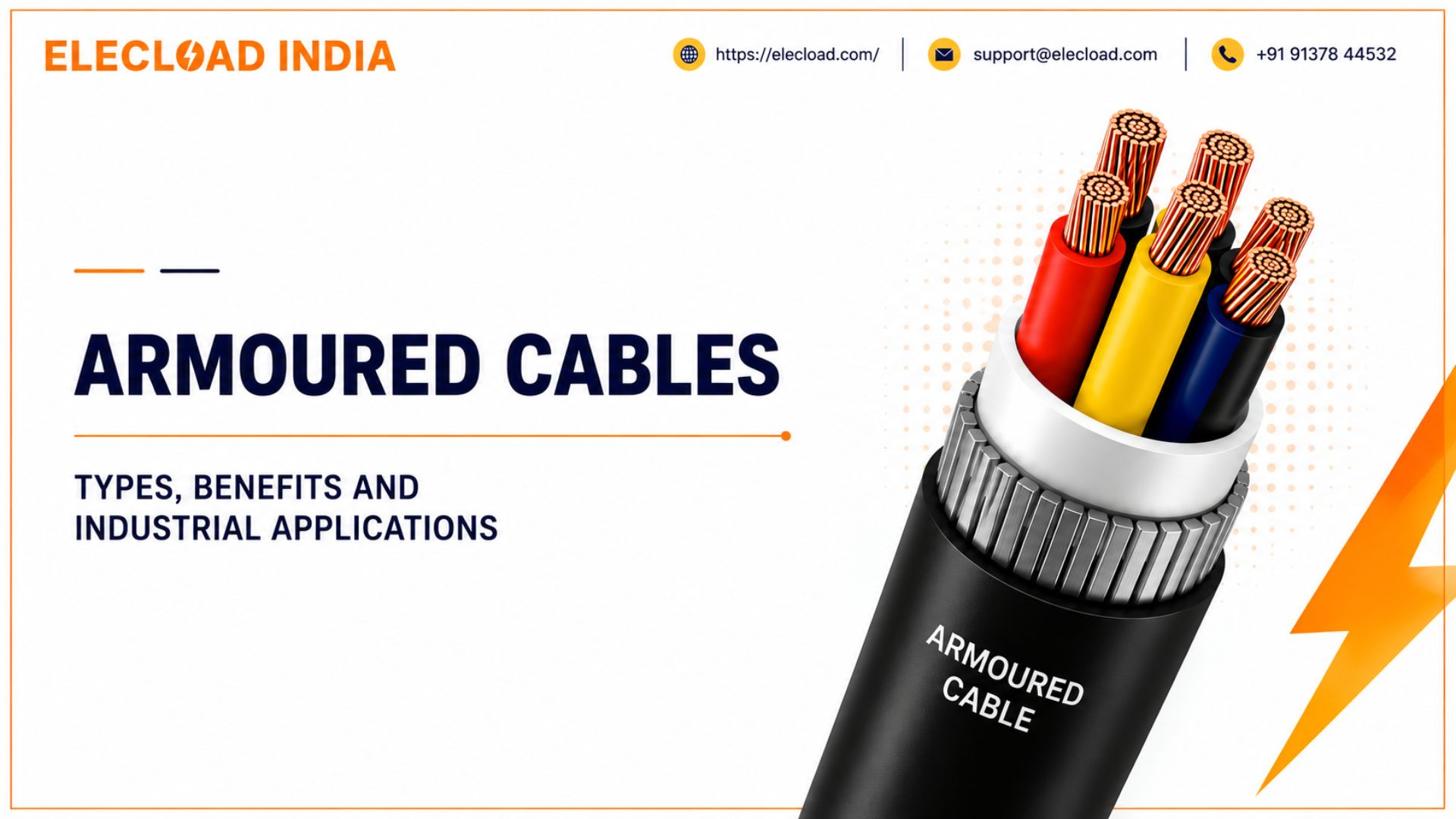
Construction Layers of an Armoured Cable
Understanding the construction of armoured cables makes it easier to interpret product specifications and compare options before buying.
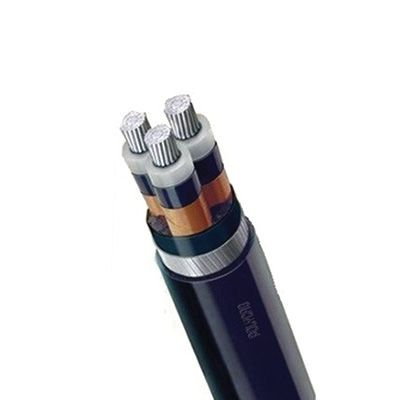
The first layer at the centre is the conductor. In copper armoured cables, this is stranded annealed copper wire. In aluminium armoured cables, this is a stranded aluminium wire. The conductor carries the electrical current, and its cross-section in square millimetres (sqmm) determines how much current the cable can safely carry.
The second layer is the conductor insulation. Each conductor is covered with PVC or XLPE insulation to electrically isolate it from the other conductors. PVC insulation suits most standard low tension applications. XLPE insulation offers better thermal performance and is used in cables operating at higher current densities or elevated temperatures.
The third layer is the inner sheath or bedding. After the individual insulated conductors are assembled together, a bedding layer of PVC compound wraps around them to hold them in a regular cylindrical shape and provide a smooth surface for the armour to sit on.
The fourth layer is the armour itself. In steel wire armoured (SWA) cables, helically wound galvanised steel wires form this layer. In aluminium wire armoured cables, aluminium wires serve the same purpose with a lighter weight. The armour provides crush resistance, impact protection, and resistance to rodent damage.
The fifth and outermost layer is the outer sheath. A PVC or LSZH outer jacket wraps the entire assembly, protecting against UV radiation, moisture, oil, and physical abrasion.
Types of Armoured Cables Available in India
Steel Wire Armoured Cables (SWA)
SWA cables are the most widely used type in Indian commercial and industrial projects. The galvanised steel wire armour offers maximum mechanical strength, making these cables suitable for direct burial, installation in cable trays exposed to mechanical hazards, and running through areas where the cable could be subjected to impact or compression.
SWA cables are available in both copper and aluminium conductor versions, in 2 core, 3 core, and 4 core configurations, across a wide range of cross-section sizes from 1.5 sqmm up to 240 sqmm and beyond.
Copper Armoured Cables
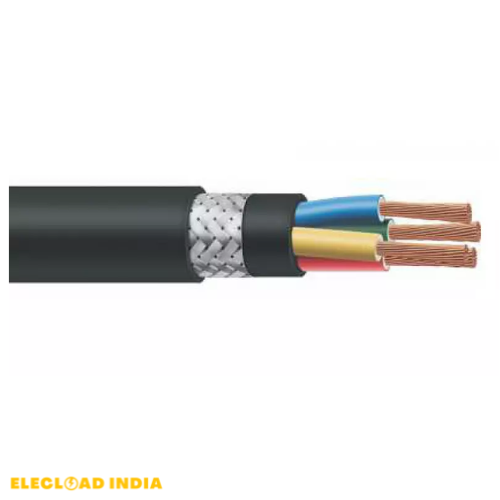
Copper armoured cables use copper conductors throughout and are typically protected with steel wire armour. Copper’s superior electrical conductivity means copper armoured cables carry the same current as an aluminium cable with a smaller conductor cross-section. This makes them physically more compact and easier to handle for connections and terminations.
Copper armoured cables are the standard choice for shorter runs, connections to motors and equipment, indoor sub-distribution work in industrial plants, and any application where a smaller cable diameter and easier termination are practical advantages.
At Elecload India, the Polycab copper armoured cable range covers sizes from 1.5 sqmm 2 core up through 16 sqmm 4 core for residential and commercial projects, with a 3 core 2.5mm cable variant being a popular choice for lighter duty wiring applications where three conductors are needed in a protected cable.
Aluminium Armoured Cables
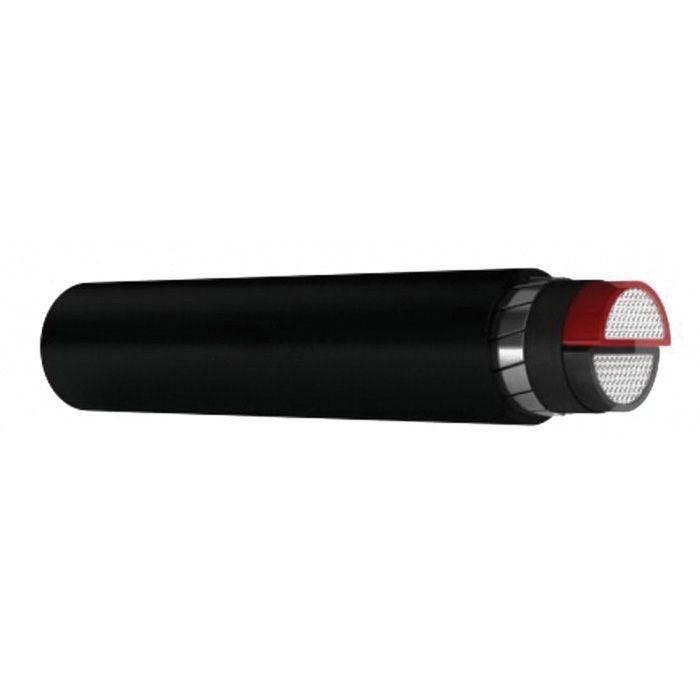
Aluminium armoured cables use aluminium conductors and aluminium wire armour. Aluminium has lower conductivity than copper, so aluminium cables need a larger conductor cross-section to carry the same current. However, aluminium weighs significantly less than copper, which makes long cable runs physically easier to handle, and the aluminium cable price per metre is substantially lower than that of equivalent copper, making aluminium the more economical choice for long distribution runs.
Aluminium armoured cables are the standard choice for underground mains distribution in Indian residential complexes, the incoming supply connections from utility substations to building main panels, and any long distance power distribution run where conductor material cost is a significant factor in the project budget.
At Elecload India, Polycab aluminium armoured cables are available in 6 sqmm and 16 sqmm configurations in 2 core and 3 core options, covering the common sizes used in residential complex distribution and smaller commercial mains connections.
Copper Armoured Cables vs Aluminium Armoured Cables
This is a crucial aspect for all buyers, as the choice between aluminum and copper will affect the project’s cost and the installation experience.
Copper conductors offer more electrical conductivity, meaning that fewer cross-sections are required to achieve the same capacity for carrying current. Copper is also easier to connect without a mess at the cables’ ends, and it is more flexible when it comes to installation and less prone to rusting at the connections. Due to this, copper-encased cables are an excellent option for shorter runs or equipment connections as well as for installations where cross-sections of conductor and cable diameter is crucial.
Aluminium conductors are lighter, significantly less expensive per kilogram of conductor material, and more cost effective for long runs where the total weight and material cost of the cable are substantial. The aluminium cable price advantage over copper becomes increasingly significant at larger cross sections, where the difference in material cost per metre can be very considerable.
The choice ultimately comes down to run length and budget for short runs feeding equipment, where ease of termination and compact diameter matter; copper armoured cables are the better choice. For long underground distribution runs between buildings or from substations, aluminium armoured cables deliver better value without compromising on protection or long-term performance.
Standard Sizes of Armoured Cables in India
Armoured cables are manufactured in a range of conductor cross-sections measured in square millimetres, covering applications from lightly loaded control circuits to heavy power distribution.
At the smaller end, 1.5 sqmm and 2.5 sqmm sizes are used for lightly loaded circuits and control wiring where the cable needs mechanical protection, but the current demand is modest.
The 4 sqmm, 6 sqmm, and 10 sqmm sizes cover single phase and three phase power circuits for water pumps, small motors, and general commercial power distribution.
The 16 sqmm, 25 sqmm, and 35 sqmm sizes are used for building sub-mains, distribution board feeder cables, and medium capacity motor feeds in commercial and industrial installations.
For heavy power distribution in large buildings, industrial plants, and utility connections, sizes from 50 sqmm through 240 sqmm are specified, typically in aluminium conductor versions, given the cable length and material cost at these cross sections.
Core configurations available include 2 core for single phase supply, 3 core for three phase without neutral or single phase with earth, and 4 core for three phase plus neutral, which is the most widely used configuration for three phase power distribution in Indian buildings.
Industrial and Commercial Applications of Armoured Cables
Underground Power Distribution
Direct burial is the most common application for armoured cables in India. Residential complexes, industrial estates, commercial developments, and infrastructure projects all use underground armoured cables to connect substations, meter rooms, and individual buildings to each other. The steel wire armour provides the mechanical protection needed to survive in soil over long service lives without a conduit.
Building Sub-Mains and Riser Cables
Multi-storey residential buildings and commercial towers distribute three phase power between floors using armoured cables in cable risers. The armour protects the cable from damage during installation in tight shaft spaces and from accidental mechanical contact during future maintenance work in the shaft.
Industrial Plant and Factory Wiring
Manufacturing facilities, processing plants, and warehouses use armoured cables for power distribution to machinery, motors, control panels, and equipment. In industrial environments where cable routes are exposed to mechanical hazards, vibration, chemical spills, and rodent presence, the armour layer provides the level of protection that standard flexible cables cannot offer.
External and Outdoor Installations
Outdoor cable runs across building facades, along cable bridges, and between external structures all benefit from the armour layer, which provides mechanical strength along with the outer sheath’s UV resistance to handle outdoor exposure over many years.
Generator and UPS Output Connections
Standby generators and large UPS systems in commercial buildings use armoured cables for the output connection to transfer switches and essential load panels. The short but high-current runs in plant rooms, where mechanical hazards from equipment and foot traffic are realistic, make the armour layer a practical requirement.
How a Complete Electrical Installation Uses Armoured Cables Alongside Other Products
Armoured cables carry power between major supply points in a building or site. They do not work in isolation. The complete electrical chain that runs from the utility supply to the end user involves many products working together.
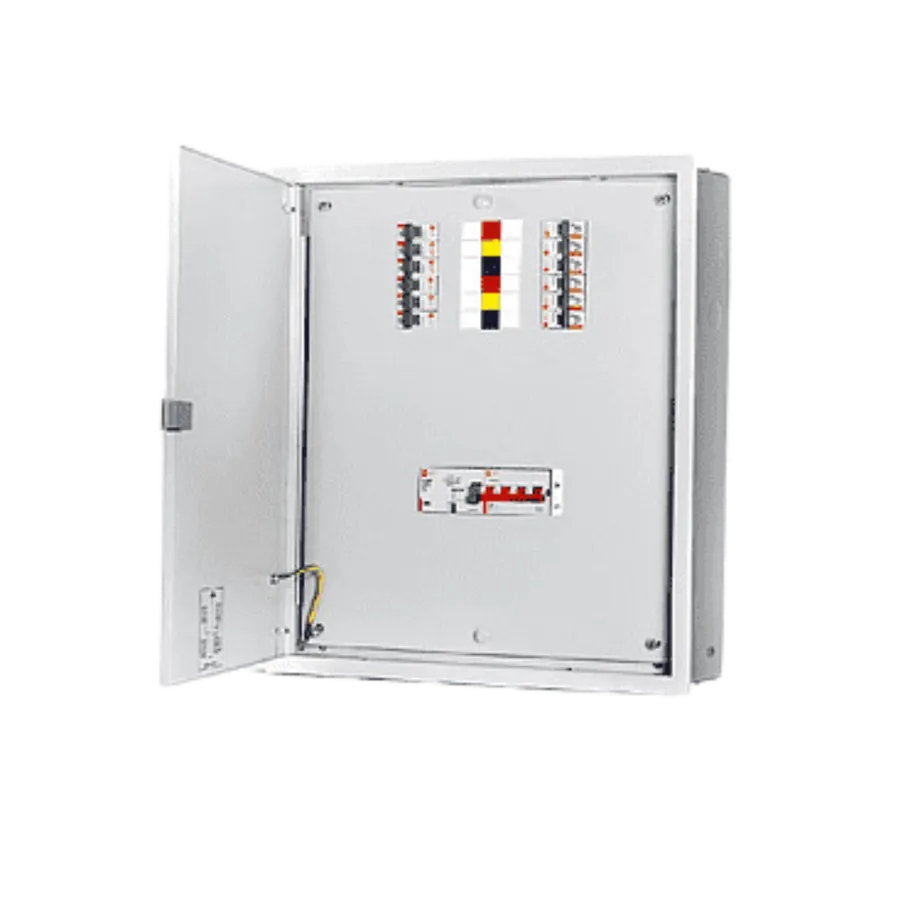
The incoming supply arrives at the main panel through underground armoured cables from the utility substation. The main panel houses the protection devices, including MCBs, RCCBs, and, for individual circuit protection, RCBO breakers that combine earth leakage and overcurrent protection in one device. The ongoing maintenance cost of an installation also includes checking the ELCB price and the RCCB price when upgrading protective devices, since these are the safety components that protect people from the power the armoured cables deliver.
From the main panels, standard house wiring distributes power through conduits to the one way switches, sockets, fan points, and appliances that the end users interact with every day.
When terminating armoured cables at panels and equipment, cable glands and cable lugs from the cable accessories range are required to make proper, mechanically secure connections. The armour must be clamped correctly using the right cable gland size to maintain the cable’s mechanical protection all the way to the termination point.
IS Standards for Armoured Cables in India
For any buyer specifying armoured cables for Indian projects, BIS certification is a critical quality indicator.
IS 1554 Part 1 covers PVC insulated heavy duty cables including the armoured versions. This standard specifies conductor quality, insulation thickness, armour construction, and outer sheath requirements for cables rated at 1.1 kV.
IS 7098 Part 1 covers XLPE insulated cables, including armoured types. XLPE cables offer superior performance at higher operating temperatures and are preferred for cables that will be operated close to their maximum current-carrying capacity.
All armoured cables stocked at Elecload India carry ISI marking under the relevant BIS standards, ensuring compliance with Indian quality and safety requirements.
What to Check Before Buying Armoured Cables
Conductor material: Choose copper for shorter runs and equipment connections. Choose aluminium for long underground distribution runs where the aluminium cable price advantage is significant.
Conductor cross-section: Calculate the required sqmm from the full load current, the cable length, and the installation method. Never undersize, as undersized cables overheat under load.
Number of cores: 2 cores for single phase, 3 cores for three phase without neutral, 4 cores for three phase with neutral.
Armour type: SWA with galvanised steel wire for most applications. Aluminium wire armour where lighter weight is preferred, and the armour will serve as the earth conductor.
Voltage rating: Most LT installations in India use 1.1 kV rated cables. Confirm this before ordering.
BIS certification: Only purchase cables with ISI marking from authorised distributors. Uncertified cable creates a safety risk and regulatory non-compliance.
Why Choose Elecload for Armoured Cables?
Armoured cables are not a premium upgrade for people who want extra protection. They are the only correct choice for underground installation, outdoor cable routes, industrial wiring environments, and any application where mechanical damage to an unprotected cable is a realistic risk. Using a standard cable in a situation that demands an armoured cable is both a safety hazard and a code violation.
The choice between aluminium armoured and copper cables comes down to length as well as budget. For equipment connections that are short and indoor environments that are controlled, copper is the best option. If you need long underground distribution lines in commercial and residential sites, aluminium can provide significant savings in cost with the aluminium cable cost without sacrificing security or performance.
At Elecload India, the complete range of armoured cables from Polycab, covering both copper and aluminium variants across standard core configurations and cross-sections, is available online with genuine ISI marked quality, manufacturer warranty, and pan-India delivery.
Browse All Armoured Cables at Elecload India
Frequently Asked Questions
Q1. What is an armoured cable and when is it used?
An armoured cable is a power cable with a built-in mechanical protection layer, either steel wire or aluminium wire, wrapped around the insulated conductors inside the cable. It is used wherever standard unarmoured cables would be at risk from mechanical damage, including underground burial, outdoor cable routes, industrial plant wiring, and building cable risers. The armour allows the cable to be installed without a separate protective conduit in most of these applications.
Q2. What is the difference between an SWA cable and a standard cable?
SWA (Steel Wire Armoured) cable has a helical layer of galvanised steel wires wound around the cable core as mechanical protection. Standard cables rely entirely on the outer PVC sheath for protection and are not suitable for direct burial or areas with mechanical hazards. SWA armoured cables can be buried directly, installed on exposed cable trays, and used in industrial environments where mechanical damage is a realistic risk.
Q3. What is the difference between copper armoured cables and aluminium armoured cables?
Copper armoured cables use copper conductors and offer better electrical conductivity per sqmm of conductor area. They are preferred for short runs, equipment connections, and where cable diameter matters. Aluminium armoured cables use aluminium conductors, are lighter, and have a lower material cost per metre. They are preferred for long underground distribution runs where conductor material cost is high, and the aluminium cable price advantage over copper is substantial.
Q4. What IS standard that applies to armoured cables in India?
IS 1554 Part 1 applies to PVC insulated armoured cables rated at 1.1 kV, which covers most residential and commercial LT applications. IS 7098 Part 1 applies to XLPE insulated armoured cables. The Bureau of Indian Standards governs both standards and compliance, which is indicated by the ISI marking on the cable.
Q5. What sizes of armoured cable are available in India?
Armoured cables in India are available in conductor sizes from 1.5 sqmm up to 240 sqmm and beyond, in 2 core, 3 core, and 4 core configurations. At Elecload India, the Polycab range covers copper armoured cables from 1.5 sqmm 2 core to 16 sqmm 4 core, and aluminium armoured cables in 6 sqmm and 16 sqmm options. For sizes not listed, bulk and special order options are available.
Q6. Do armoured cables need conduit protection when installed underground?
No. Armoured cables are specifically designed for direct burial without conduit. The steel or aluminium wire armour provides sufficient mechanical protection against soil pressure, occasional digging contact, and rodent damage. This is one of the key advantages of armoured cables over standard cables, which must be installed inside a conduit before burial to be protected.
Q7. What cable glands and lugs are needed for armoured cable terminations?
Proper termination of armoured cables requires correctly sized cable glands to secure the cable and clamp the armour at the entry point to panels and equipment. Cable lugs are needed to terminate the conductor ends onto busbar or terminal connections. Both are available at Elecload India from the cable accessories range.
Q8. Can aluminium armoured cables be used for all applications?
Aluminium armoured cables are suitable for underground distribution, building mains connections, and any long cable run where material cost is a significant factor. They are not preferred for short runs feeding equipment where copper termination is more practical, or for frequent bend and flex applications where aluminium’s lower fatigue resistance compared to copper can be a concern.
Q9. What protection devices are typically used alongside armoured cables in a building installation?
Armoured cables carry supply power to the main panel and between distribution boards. The main panel contains MCBs for overload and short-circuit protection of individual circuits, RCCBs for earth leakage protection at the installation level, and optionally RCBO breakers for combined earth leakage and overcurrent protection on individual circuits. Checking the current ELCB price and RCCB price at Elecload India helps in budgeting for the complete panel protection alongside the cable supply.
Q10. Where can I buy genuine armoured cables online in India?
You can buy genuine armoured cables, including copper armoured cables and aluminium armoured cables, from Polycab at Elecload India, elecload.com. Founded by Bhavin Joshi in December 2019 and based in Mumbai, Elecload India offers ISI marked genuine cables, manufacturer warranty, secure online payment, and fast delivery across India. Call 9321025013 for bulk pricing and product queries.
Shop Armoured Cables at Elecload India
Published by Elecload India | Founded by Bhavin Joshi | Shop no. 31A, Khajuria Nagar, Khajuria Tank Road, Near Bhadran Nagar, Kandivali West, Mumbai, Maharashtra 400067 | Phone: 9321025013 | Category: Wires and Cables | Last Updated: June 2026